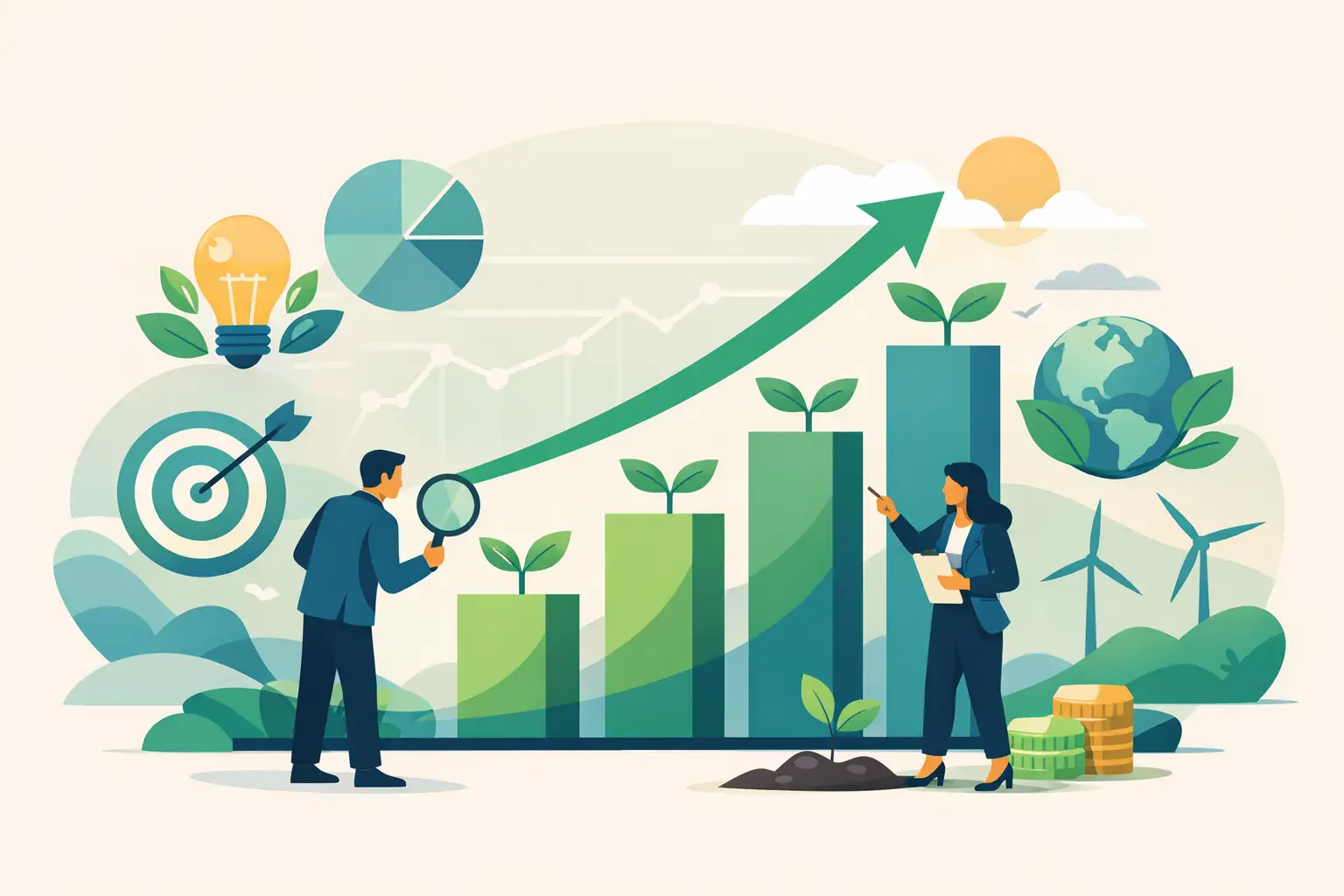
Growth feels exciting until it starts stretching everything thin.
A lot of small business owners ask how to plan sustainable growth when what they really mean is this: How do I get more customers without breaking my team, draining cash, or creating a business I no longer enjoy running? That is the right question. Fast growth is not always healthy growth, especially when your systems, marketing, and capacity are already under pressure.
Sustainable growth is about building momentum you can actually support. It means your sales, operations, marketing, and customer experience move together at a pace your business can handle. No flashy promises. Just steady, measurable progress.
What sustainable growth actually means
Sustainable growth is not the same as staying small or playing it safe. It means growing in a way that protects your margins, your reputation, and your ability to deliver consistently. If more demand leads to missed calls, delayed projects, poor service, or confused messaging, the growth is costing you more than it is helping you.
For most small businesses, sustainable growth has three parts. First, your offer still needs to be profitable as volume increases. Second, your operations need to support a higher customer load without constant founder intervention. Third, your marketing needs to produce reliable visibility instead of random spikes.
That last point matters more than many owners realize. A sudden burst of leads from one campaign can feel like success, but if nothing about your process is repeatable, you are back at zero the next month. Sustainable growth is built on repeatable systems, not adrenaline.
How to plan sustainable growth from the inside out
Before you spend more on marketing, pause and look at what your business can realistically support. This is where many growth plans go sideways. Owners focus on getting more leads before they fix what happens after someone clicks, calls, or walks through the door.
Start with capacity. How many new customers can you serve well each month with your current team, tools, and schedule? Not the absolute maximum in a stressful month – the real number you can handle without quality slipping. If you do not know that number, you are planning growth without a baseline.
Next, look at delivery. Where do delays happen? Where do customers get confused? Where does work rely too heavily on you? Sustainable growth usually requires tightening operations before increasing demand. That might mean better scheduling, clearer intake forms, stronger follow-up, or documented processes your team can actually use.
Then review your cash flow. Growth often creates upfront costs before it creates stable returns. You may need to invest in ad spend, software, staffing, training, or inventory before the revenue catches up. If your plan does not account for that gap, growth can create more stress than stability.
Set growth goals that are specific and realistic
Vague goals create vague results. If your growth plan is simply to get bigger, you will struggle to know what to prioritize or measure.
A better approach is to define what growth should look like over the next 6 to 12 months. That might mean increasing monthly revenue by a certain percentage, raising average customer value, improving retention, expanding into a nearby service area, or generating a more predictable number of qualified leads each month.
The key is choosing goals that match your actual business model. For some companies, sustainable growth comes from getting more new customers. For others, it comes from improving close rates, strengthening repeat business, or focusing on the most profitable services instead of trying to sell everything to everyone.
This is one of the biggest trade-offs in small business growth. More volume is not always the best answer. Sometimes the better move is better positioning, better pricing, and better efficiency.
Build a marketing plan that supports sustainable growth
Marketing should create consistent visibility and trust, not constant panic. If you are relying on last-minute promotions or jumping from tactic to tactic, your business is reacting instead of growing with intention.
A sustainable marketing plan starts with clarity. You need to know who you want to reach, what problem you solve, and why someone should choose you over other local options. If your messaging is too broad, your marketing budget gets wasted on the wrong audience.
From there, focus on channels you can maintain. For many small businesses, that means a strong website, basic SEO, local SEO, a fully optimized Google Business Profile, a clear review strategy, and a manageable content rhythm. Paid ads can help, but only if the foundation is solid. Driving traffic to a weak website or unclear offer usually just accelerates frustration.
This is also where data matters. You do not need enterprise-level reporting, but you do need enough visibility to answer simple questions. Where are leads coming from? Which pages are getting attention? Which campaigns produce inquiries that turn into paying customers? Without that information, it is easy to keep funding activities that feel busy but do not move the business forward.
At Brown Business Group, this is often where owners feel relief. They do not need more noise. They need a plan that connects visibility, conversion, and capacity.
Create systems before growth demands them
If your business depends on memory, inbox searching, and personal heroics, growth will expose that fast.
Systems do not need to be complicated. In fact, the best ones are usually simple. What matters is that key parts of the business happen consistently. That includes lead intake, appointment scheduling, estimate delivery, customer communication, follow-up, review requests, and reporting.
When systems are missing, owners become the bottleneck. Every question routes through them. Every problem becomes urgent. Every missed handoff turns into a customer service issue. That is not sustainable, even if revenue is increasing.
A practical way to approach this is to identify the few repeatable actions that happen every week and document them first. What happens when a lead comes in? What happens after a job is completed? When do you ask for a review? How do you track whether marketing is actually working? You do not need a giant operations manual. You need enough structure to reduce chaos.
Measure what helps you make decisions
One reason growth feels confusing is that many businesses track too much of the wrong stuff. Likes, clicks, and impressions can be useful, but they are not the whole story. If they do not connect to actual business outcomes, they can distract more than they help.
For a small business, the most useful numbers are usually simple. Track lead volume, lead quality, conversion rate, cost to acquire a customer, average job or order value, repeat customer rate, and basic retention where relevant. Layer in website traffic and local search performance if those are key channels for your business.
The goal is not to become obsessed with dashboards. The goal is to make better decisions faster. If lead volume is up but close rate is down, the issue may be targeting or sales process. If traffic is growing but inquiries are flat, your website may not be doing its job. If revenue is rising but cash is still tight, pricing or margins may need attention.
Good planning depends on honest measurement.
Protect the customer experience as you grow
Customers notice when a business is growing faster than it can manage. Response times slow down. Communication gets inconsistent. Details get missed. Trust drops quickly.
That is why customer experience should be part of any plan for sustainable growth. As demand increases, think through what needs to stay true about working with your business. Maybe it is fast follow-up, clear communication, on-time service, or a personal touch competitors do not offer. Whatever it is, protect it on purpose.
This may mean saying no to certain opportunities. Not every partnership, service expansion, or ad campaign is worth pursuing if it weakens the experience that built your reputation in the first place. Sustainable growth often requires discipline more than ambition.
When to speed up and when to slow down
There is no universal timeline for growth. Some businesses are ready to invest aggressively because demand is proven, margins are healthy, and systems are in place. Others need to slow down, clean up operations, and fix conversion issues before adding more marketing.
That is the part many people skip. They assume growth planning is mostly about acceleration. Often, it is about sequence. Do the right things in the right order. Strengthen your foundation, clarify your goals, build repeatable marketing, and support it with systems and measurement.
If you are wondering how to plan sustainable growth, start by making your business easier to run before you try to make it bigger. Growth becomes a lot less stressful when it is built on clarity, not guesswork.
The strongest businesses are not the ones chasing every opportunity. They are the ones building enough structure, trust, and consistency to keep moving forward without losing themselves in the process.